
Also on: https://bkdevops.lk/local-seo-basics-sri-lanka-service-businesses/
If you run a clinic, hotel, garage, salon, tuition centre, or any service business in Sri Lanka, most of your best customers are nearby—or at least searching with a place in mind. Local SEO is how you show up for those searches: “dentist near Kurunegala,” “web design Sri Lanka,” “AC repair Negombo,” and similar queries.
You do not need a huge ad budget to start. You need clear business information, a useful website, and steady reviews. This guide covers the basics that matter for regional SMEs—without jargon overload.
What local SEO actually means
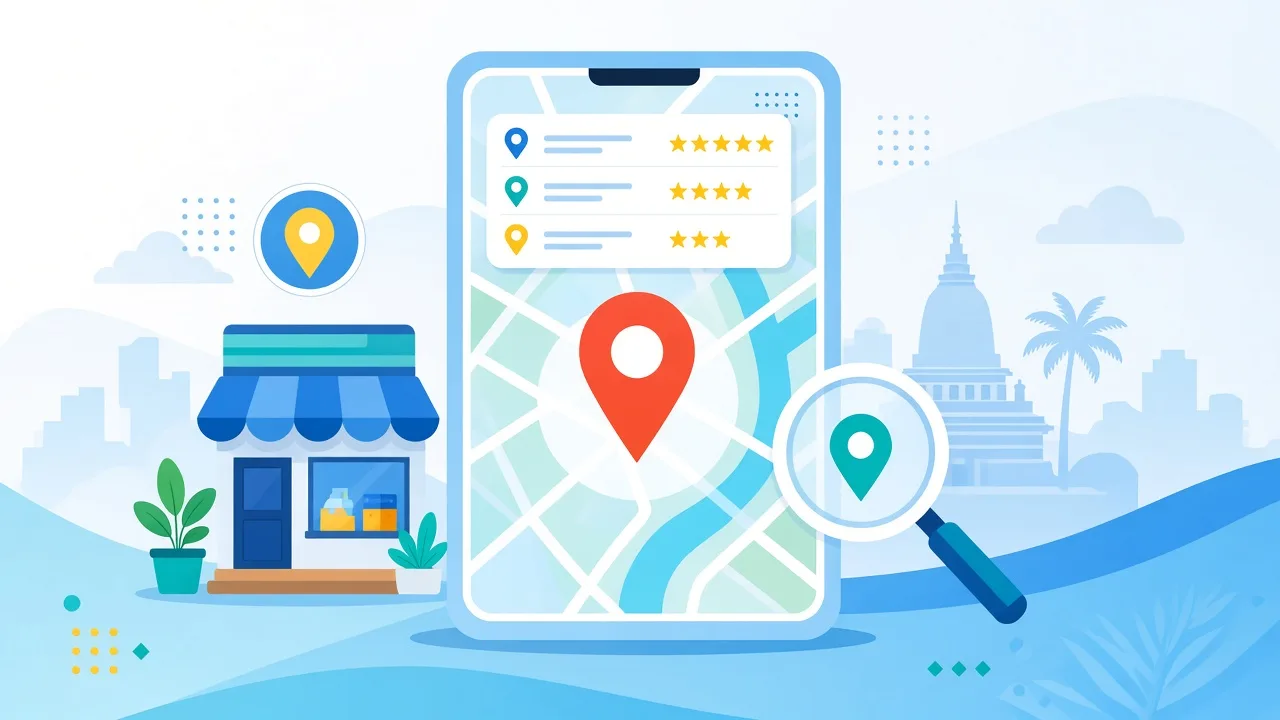
Local SEO helps search engines connect your business to a place and a service. When someone searches with intent + location (or Google detects they are nearby), you want to appear in:
- The Map Pack (the map + three business listings)
- Organic results for local landing pages
- Sometimes Knowledge Panel / Business Profile details
For many Sri Lanka service firms, the Map Pack and a strong Google Business Profile drive more phone calls than a generic national blog post.
Step 1: Claim and complete your Google Business Profile
Your Google Business Profile (GBP) is often the highest-impact free asset you have.
Checklist:
- Claim and verify the profile for the correct business entity
- Use the real business name customers know (avoid keyword stuffing in the name)
- Choose accurate primary and secondary categories
- Add service areas if you travel to customers; add a precise address if clients visit you
- Fill hours, phone (preferably a number people can call), website URL, and short description
- Add clear photos: storefront, team, work examples, vehicles/branding if relevant
- Keep products/services list updated in plain language
For multi-location brands, create separate profiles only when locations are genuinely distinct and staffed. One fake “branch” per town usually backfires.
Step 2: Keep NAP consistent everywhere
NAP means Name, Address, Phone. Inconsistent details confuse customers and search engines.
Align these across:
- Website footer and Contact page
- Google Business Profile
- Facebook / Instagram / LinkedIn
- Directories you actually use (industry lists, tourism boards, chamber sites)
- Printed materials and WhatsApp business details
Use one primary phone format and stick to it. If you moved offices in Kurunegala or elsewhere, update every public listing—not only the website.
Step 3: Build service pages that match how people search
A single homepage that says “we do everything” is hard to rank and hard to convert. Create focused pages for the services people actually type, for example:
- “Residential plumbing in [city]”
- “Wedding photography in [city / district]”
- “WordPress website design for small businesses”
On each page, include:
- Who the service is for
- What is included / typical process
- Area you cover (towns, districts, island-wide if true)
- Proof: photos, short case notes, certifications
- A clear next step: call, WhatsApp, or form
Write for humans first. Mention Sri Lanka places naturally when they are real service areas—not as a spammy list of every town on the island.
Step 4: Make the website easy to trust on mobile
Most local searches happen on phones. Your site should:
- Load reasonably on mobile data
- Show phone and WhatsApp links that work in one tap
- Display address/map embed where visits matter
- Use readable fonts and clear buttons
- Avoid intrusive pop-ups that block the call button
Technical SEO still matters (HTTPS, sensible titles, indexable pages), but for local leads, speed + contact clarity often decide whether someone dials you or the next result.
Step 5: Collect and respond to reviews
Reviews influence both rankings and conversion. A practical system:
- Ask happy customers soon after a successful job (SMS/WhatsApp works well locally).
- Make the review link easy—do not force people to hunt for it.
- Reply to reviews, including critical ones, calmly and briefly.
- Never buy fake reviews. Platforms catch patterns; the trust damage is not worth it.
Encourage specific feedback (“fixed our booking form the same day”) over generic praise. Specific reviews help future customers—and give you content ideas for your site.
Step 6: Use local content without becoming a content farm
You do not need daily blog posts. You need useful pages and occasional updates that match real demand, such as:
- Seasonal service reminders (monsoon maintenance, tourist-season hours)
- Answers to questions you already get on WhatsApp
- Before/after project stories with permission
- Clear pricing ranges when you can share them (builds trust)
If you also run broader digital marketing, keep local SEO and ads aligned: same service names, same phone number, same landing pages. Mixed messages waste budget.
Step 7: Track what creates calls—not only rankings
Measure outcomes that matter for an SME:
- Calls and form leads from the website
- GBP insights (calls, direction requests, website clicks)
- Which service pages convert
- Search Console queries that include your city or “near me” style intent
A page that ranks #3 and brings weekly enquiries beats a vanity keyword that never converts.
Common local SEO mistakes to avoid
- Stuffing every Sri Lankan city into one page footer
- Creating doorway pages with thin duplicate text
- Leaving the Business Profile half-empty for months
- Changing the business name to include every keyword
- Ignoring mobile usability because “the desktop site looks fine”
- Building the site on unstable hosting so Googlebot and customers both bounce
Local SEO rewards clarity and consistency more than tricks.
Soft next step
If your website is outdated, slow, or missing proper service pages, local SEO work will struggle. BK DevOps helps Sri Lankan service businesses with WordPress sites, SEO, and hosting set up for real enquiries—not just “being online.” Explore our projects or contact us for a practical review of your Business Profile + website foundations.
Comments
Post a Comment